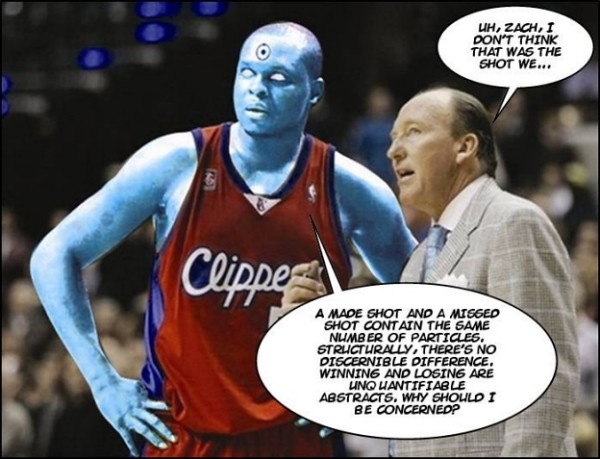
Heel Face Turn (heel fas' turn) noun. When a formerly (and widely recognized) "bad guy" becomes a "good guy."
Usage example: Zach Randolph pulled a heel face turn this season.
Word origin: In Professional Wrestling, an evil wrestler (known as a "heel") sometimes has a change of heart and becomes good, transforming into a "babyface." The term for this is "Heel Face Turn."
The Heel Face Turn, or the concept at least, didn't originate in Professional Wrestling. It's actually a pretty common literary device. One of the most well-known Heel Face Turns occurs when Ebenezer Scrooge goes from being an evil old miser to a loving bastion of generosity in Charles Dickens' 1843 novel A Christmas Carol. A similar metamorphosis happened to the Grinch in Dr. Seuss' How The Grinch Stole Christmas.
Don't get me wrong. The Heel Face Turn isn't limited to Christmas stories. For example, take Dolokhov in War and Peace, Edmund in King Lear, or Inspector Javert in Les Misérables. They all did Heel Face Turns.
Of course, the Heel Face Turn happens in movies all the time. A classic example was when Arnie's T-800 was sent back in time to save John Connor in Terminator 2. But the best film example -- and maybe the most well-recognized modern example -- was when Darth Vader turned on Emperor Palpatine to save his son in Return of the Jedi.
The Heel Face Turn happens in real life, too. Take the story of Johann Blumenbach, the man who helped popularize the concept of "scientific" racism, known as eugenics. Blumenbach went on to fall in love with a black woman and spent much of the rest of his career trying to undo his mistakes.
In the realm of real life, though, Heel Face Turns happen most often in sports. Take the (relatively recent) story of Brett Favre, who went from a tormenter of the Vikings to a hero that nearly led them to a Super Bowl (and then, of course, blew his hero status to hell by playing like feces the next season).
This happens periodically in the NBA as well. Just this season, Zach Randolph went from heel to babyface right before our eyes. There wasn't a large deviation in his stats, which remained similar to his career numbers, but he seemingly became more interested in contributing to a winning situation than "getting his."
For most of his career, Z-Bo had annoyed and/or astounded his coaches and teammates by displaying a shockingly low basketball IQ. I mean, here was a guy who was unstoppable in the paint, but who would jack up three-pointers in critical situations. Nobody knew quite what to expect from Zach...other than that he would make the worst conceivable decision and the worst possible time.
Until this season. Remember, prior to the 2010-11 campaign, Randolph was widely considered a loafer at best and a head case at worst. In essence, he was seen as a better (and let fat) version of Eddy Curry.
Randolph's Heel Face Turn happened slowly over the course of the season, but his clutch dismantling of the Spurs in the first round of the 2011 Western Conference Playoffs was "The Moment" when his transformation became complete. The change didn't only change the public perception. It seems (unless I'm way off here) to have changed Randolph's perception of himself. Take the Grizzlies' second round series against the Thunder. If you watched it, you know Oklahoma City's anti-Randolph strategy was to play Z-Bo as physically as possible. They grabbed him, held him, sometimes arm-locked him and often delivered "harder than strictly necessary" fouls.
The old Zach, I'm convinced, would have eventually lost his shit and thrown a punch. Or at least flipped somebody off. I mean, we're talking about a guy who once face-punched a teammate in practice. And there were times I think he really wanted to do that to somebody on the Thunder. But when those situations presented themselves, he could be seen visibly calming himself and then patting his defender(s) on the back and saying something like, "Good foul, man."
It wasn't just a career transformation. It was a life transformation.
Other notable Heel Face Turns include:
Wilt Chamberlain, who became a hero in the later stages of his career, if only because NBA fans had become threatened by the emergence (and political/religious leanings of) Kareem Abdul-Jabbar.
Kareem also did a Heel Face Turn during the second half of his stint with the Lakers. He went from being a cold, angry black man who aroused fear and resentment to a wise elder statesman and a winner. (It helped that he was paired with the irresistibly charismatic Magic Johnson. In point of fact, Magic's demeanor may have done more to change perception about Kareem than anything Abdul-Jabbar did himself.)
Dennis Rodman experienced a lesser version of the Heel Face Turn when he -- a former Bad Boy Piston and certified villain in Chicago -- joined forces with Michael Jordan on the Chicago Bulls.
Shaq, who for years had been seen as a fearsome (and, at times, spiteful) goliath who used his mammoth strength (and uncalled offensive fouls) rather than skill to power his way to the basket, became a sympathetic figure when the Lakers seemingly took sides in the big man's feud with teammate Kobe Bryant, shipping O'Neal to the Miami Heat and rebuilding around Bryant despite the fact that Shaq had been the foundation of their three most recent NBA titles.
Kobe himself went from a near pariah -- thanks largely to accusations of rape, allegations that he threw Shaq under the bus during those rape accusations by telling police that O'Neal paid his lovers off to ensure their silence, for allegedly demanding the Lakers ship Shaq out of town, and, of course, his on court selfishness -- to redeemed MVP and "The Man" on back-to-back championship teams. However, this wasn't a true Heel Face Turn, given that a very large segment of the NBA fandom still despises Bryant.
The flip side to the Heel Face Turn is the Face Heel Turn, in which a good guy becomes a bad guy. Real life Face Heel Turn examples include Marcus Brutus and Benedict Arnold. Or, using a previous example, Brett Favre. After all, Favre became a Heel in the eyes of Green Bay fans (and many other NFL fans as well) when he retired from the Packers, unretired, joined the Jets, re-retired, unretired again, joined the Vikings, re-re-retired, unretired yet again, rejoined the Vikings, re-re-re-retired, etc.
In the NBA, LeBron James did what may be the biggest Face Heel Turn in the history of sports Face Heel Turns. After years of leading his "hometown" Cavaliers -- and, in fact, promising not to stop until he led Cleveland to a championship -- he spurned the city and team that loved him with manic desperation to join Dwyane Wade and Chris Bosh in Miami. As we all know, it wasn't so much that he did it as how he did it, in a public TV spectacle that was aired on ESPN to feed his titanic ego...as if he could possibly have needed any ego-stroking. This, of course, came on the heels of several years worth of rabid speculation that has turned Cavs fansa and management into a bunch of paranoid basket cases.
In many ways, LeBron's Face Heel Turn mirrors my personal all-time favorite Face Heel Turn...by Hulk Hogan at WCW's Bash at the Beach in 1996.
And here's a funtastic extra: In this thread at TheW.com, TheOldMan transcribes Hogan's words from the bash, as if it was what LeBron really said during The Decision. In this case, Dwayne Wade would be Scott Hall and Chris Bosh would be Kevin Nash.
Michael Wilbon: LeBron James, excuse me. Excuse me. What in the world are you thinking?Usage note: Many times, you'll see Heel Face Turn shortened to simply "Face Turn" and Face Heel Turn" truncated to "Heel Turn." That's how I typically do it, anyway.
LeBron James: Wilbon, the first thing you gotta do is to tell these people to shut up if they want to hear what I've gotta say.
Michael Wilbon: I have been covering you for so many years...for you to join up with the likes of these two men absoulutely makes me SICK to my stomach! And I think that these people here and this circus? The whole basketball world have had just about enough of this man and this man and you want to put yourself in this group? You've gotta be...kidding me!
LeBron James: Well the first thing you've gotta realize brother -- is that this right here is the future of basketball. You can call this the New World Order of basketball, brother. These two men were tired of losing and everybody was wondering about who the third man was. Well, who knows more about losing in the playoffs than me, brother?
Michael Wilbon: I've covered lots of great athletes and seen how built their legacy with their original team. You have made the wrong decision in my opinion.
LeBron James: Well let me tell you something, I made the Cleveland Cavaliers, brother! I made the people rich up there. I made the people that ran that organization rich up there. And when it all came to pass, the name LeBron James, the man LeBron James got bigger than the entire organization, brother! And then James Dolan amigo, he wanted to talk turkey with LeBron James. Well, James Dolan promised me endorsements brother. James Dolan promised me a trillion dollars. And James Dolan promised me world-class teammates. Amar'e Stoudemire??? So as far as James Dolan, Dan Gilbert and the rest of the NBA goes, I'm bored brother. That's why I want these two guys here, these so called All-Stars, these are the men I want as my friends. They are the new blood of professional basketball and not only are we going to take over the whole NBA, with LeBron James, the new blood and these monsters with me. We will destroy everything in our path Wilbon.
Michael Wilbon: [referring to the garbage being thrown in their direction] Look at all of this crap at your feet! This is what's in the future for you if you want to hang around the likes of this man Wade, and this man Bosh.
LeBron James: As far as I'm concerned, all of this crap represents the fans out there. For seven years brother! For seven years, I held my head high. I did everything for the charities. I did everything for the kids. And the reception I got when I announced my decision? You Cavalier fans can stick it, brother! Because if it wasn't for LeBron James, you people wouldn't be here. If it wasn't for LeBron James, Mike Brown would be selling meat from a truck in Indianapolis. And if it wasn't for LeBron James, all of these "Johnny come-lately bandwagon fans" that you see out here - basketball wouldn't exist in Cleveland! I was selling the world out brother as an 18-year old while they were waiting tables to get through college. So the way it is now brother, with LeBron James and the New World Order of basketball brother, me and the new blood by my side. Whatcha gonna do when the New World Order runs wild on you? Whatcha gonna do?
LeBron James: [Grabs Wilbon] What are you gonna do?
Michael Wilbon: Hey, don't touch me! Don't touch me, I'm going to see the lawyers! Stu, Jim, Chris, Dammit let's get back to you!
Stuart Scott: All right. We have seen the end of LeBronamania. For Chris Broussard, for Jim Gray, For Michael Wilbon, I don't know...I'm Stuart Scott. LeBron James, you can go to hell! We're outta here. Straight to hell.
Stuart Scott: Boo-yah!
Contribute! Can you remember an NBA-related Heel Face Turn or Face Heel Turn I didn't mention? Leave it in the comments. The best submissions will be added to this post.
References: Television Tropes and Idioms; Wikipedia Glossary of Professional Wrestling Terms.
Labels: Face Heel Turn, Heel Face Turn, Hulk Hogan, Lebron James, Word of the Day, Zach Randolph
recall bias (ri'-kahl bi'-uhs) noun. Intentionally or unintentionally innaccurate recollection of past basketball or basketball-related events due to personal biases.
Usage example: I remember Kobe quitting during Game 7 of the Lakers' 2006 first round series against the Suns. But other people remember it differently. What gives?
Word History: A few years ago, I jokingly told my buddy Mister P that he sufferes from recall bias because, after a pickup game, he can't seem to accurately recall how well (or how poorly) he actually shot the ball. Specifically, unless he hits 80 percent of his jumpers -- which is fairly unlikely -- he'll tell me something like, "I shot like shit tonight." Is going 4-for-10 on threes in a pickup game "shooting like shit"? It feels that way to Mister P. So much so that he might tell you he went 2-for-10 or provide some uglier (and equally inaccurate) shooting statistic.
When I give him the actual number, it almost always takes him my surprise.
According to mediLexicon, recall bias is "systematic error due to differences in accuracy or completeness of recall to memory of past events or experiences." Furthermore, the article Recall Bias can be a Threat to Retrospective and Prospective Research Designs says "[recall bias] arises when there is intentional or unintentional differential recall (and thus reporting) of information." Stuffy scientists may tell you I'm bastardizing the definition a little -- or a lot -- but the point is, the way we remember things is highly dependent on our point of view and personal biases.
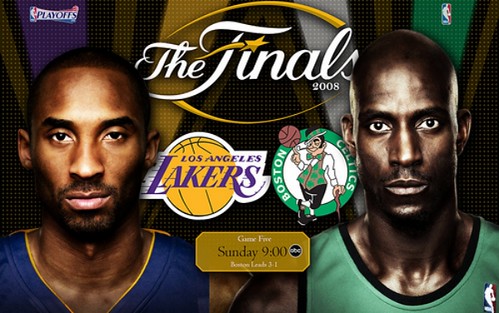
That's why it can be so hard to find "The Truth" when talking about basketball, whether you're discussing the results of a weekly pickup game or the NBA Finals. In fact, let's take the 2008 NBA Finals as a perfect example. After the Celtics clinched the title with a whopping 131-92 win in Boston, Bob Ryan of the Boston Globe said: "What we had, ladies and gentlemen, was the first six-game sweep in NBA Finals history. The Celtics dominated the three games in Boston, and they absolutely, positively could have won all three games in LA."
Really, Bob? In Game 1, Boston was behind by five points at halftime and led by only four points heading into the fourth quarter before winning 98-88. A solid win, but hardly dominating. In Game 2, the Lakers outscored the Celtics 41-25 in the fourth quarter and nearly pulled off one of the great comebacks in Finals history. In Game 4, the Celtics did pull off one of the great comebacks in Finals history: L.A. jumped out to a 35–14 lead after 12 minutes -- which was the largest first-quarter lead in NBA Finals history -- and led by as many as 24 points in the third quarter before Boston's comeback.
Still, the Celts' performance in the Game 6 clincher was so overwhelming that, in retrospect, it may have seemed like the Lakers never really had a chance. It certainly seemed that way to Ryan, not to mention ESPN's Marc Stein.
And yet...if we add L.A.'s Game 2 comeback and subtract Boston's Game 4 comeback, the Lakers could have won it in five or six games, right? Or maybe it would have gone to seven. Who knows? The point is, the series wasn't a sweep, and only the final game was truly uncompetitive.
So why did Ryan and Stein -- and so many other people -- see the series as so thoroughly lopsided? Recall bias. It's funny, too, because recall bias usually affects more subjective judgements. Such as, say, whether or not Kobe quit on his team during Game 7 of the Lakers' first round series against the Suns back in 2006. With the 2008 NBA Finals, we have actual scores and results that show us close games and near misses, not to mention the fact that six games does not equal a sweep.
Regarding the "Did Kobe quit?" question, that's been a hot topic of conversation on this site. In fact, it still pops up in the comments section now and again. As everybody knows, Mamba had led an undermanned Lakers squad to a decisive seventh game against a superior Phoenix team. L.A. fell behind by 15 at halftime despite Kobe's 23 points (including 18 in the second quarter). So, in the second half, Bryant came out and...took three shots (missing them all) and scored only one point as the Lakers lost 121-90.
Did Kobe quit?
Kobe says he didn't quit, that his passive play really was part of the game plan. And Dave McMenamin of ESPNLosAngeles.com (like many before him) has provided many facts and figures suggesting that the 2006 Lakers had a better chance of beating the 2006 Suns when Kobe wasn't taking lots of shots and scoring 40+ points. That Lakers team, they will tell you, beat that Suns team by pounding the ball inside against a smaller Phoenix fountcourt.
Of course, Mamba's (and McMenamin's, and whoever else's) insistence that he didn't quit could easily be recall bias. Certainly, anybody who watched Kobe throwing listless passes to Kwame Brown in the post and then parking himself five feet behind the three-point line and just watching the play unfold with a surly scowl would tell you there might be some recall bias going on. Conversely, Kobe supporters will insist that Bryant's words are the key testimony -- after all, he lived the situation and anyway why would he misrepresent the truth about whether he quit on his own team? -- and that the facts clearly indicate he couldn't have quit. After all, he was just doing what Phil Jackson told him to do.
The real whammy is this: Both sides of the argument, and Kobe himself, could all be (and probably are) suffering from recall bias. Frankly, everybody involved has reasons to recall events in their own specific way...reasons that have nothing whatsoever to do with whether or not Kobe actually did quit. My point is not to re-open this particular can of worms -- let's face it people, we're never going to know one way or another -- I'm only trying to illustrate why determining what really happens from situation to situation is quite tricky.
On the subject of recall bias, consider the curious case of Gilbert Arenas, the former Clown Prince of the NBA. From the beginning, Arenas was just as eccentric as, say, Dennis Rodman or Ron Artest ever was. And yet his shenanigans were always met with laughter and approval. Choosing the number zero because that's how many minutes people predicted he'd play in the NBA? Ha, ha, that's Gilbert. Stuffing the ballot box to make the All-Star team? Ha, ha, that's Gilbert! Concocting imaginary feuds with various opponents to psyche himself up for games? Ha, ha, that's Gilbert!! Relentless practical joking, which included the theft and even destruction of his teammates' personal property? HA, HA, THAT'S GILBERT!!!
A few years back, those were the kind of things that built to his reputation as one of the great whimsical figures in league history. His high-scoring performances and game-winners helped, but Arenas was becoming a legend for just being Gilbert.
Then Arenas brought unlicensed (and unloaded) handguns into his team's locker room to threaten a teammate. Suddenly, perception shifted. Now Gil's past behavior wasn't funny anymore. In fact, people were suddenly looking back and seeing those incidents -- like, say, shooting a teammate's cousin with paintballs until he cried -- in a much darker light. His behavior was now deemed the product of a troubled mind rather than a fun-loving, whimsical one. Once Arenas crossed that line, finger guns would never again be funny.
Take this most recent incident, in which Arenas faked a knee injury so his teammmate Nick Young (who ended up scoring a team-high 24 points on 10-for-14 shooting in a 107-92 win) could get a rare start:
Following the game, Arenas told reporters it was all a ruse in order to give Young the opportunity for more playing time.Arenas was fined, as he should have been. You can't lie to your coach, no matter how seemingly noble the reasons were...even if the teammate you "sacrificed" for played great and your team won. However, the situation didn't end with a fine. Arenas is being crucified on blogs and in newspapers everywhere. Which is probably fair, but think about it. Imagine if the "Ha, ha, that's Gilbert!" Arenas of, say, four or five seasons ago had done the exact same thing. Would he still have been fined? Probably. Would the general public have thought any less of him for doing it? Probably not. Hell, he might have been celebrated. Now when people think back to what Arenas has done, they perceive his actions and motives very differently.
"I know he's kind of frustrated he's not getting a chance to crack the three position, especially since we're going three guards, so I told him I'd go ahead and fake an injury or say something's wrong with me so you can start," a smiling Arenas said in the locker room.
When asked about the health of his knee, Arenas said, "I'm fine," and indicated he would play on Thursday in the Wizards' final home preseason game against Milwaukee.
If you think about it, the situation can be downright scary. What's real? We live in a Wiki culture where the truth seems to be defined by a general agreement of the majority. But that's dangerous. As Leonard said in Memento: "Memory can change the shape of a room; it can change the color of a car. And memories can be distorted. They're just an interpretation, they're not a record, and they're irrelevant if you have the facts."
But what constitutes the facts? People like ESPN's John Hollinger are trying to formulate statistics that can give us the objective reality of basketball, but those numbers tell us that Corey Maggette is better than Kevin Garnett. And that's not right. It couldn't be.
If we can't have 100 percent accuracy in our memory or statistics, what can we believe in?
Whoa. I didn't mean to make this post so heavy. Honestly, I was just wondering why, when I make a sweet move in pickup ball, it looks so damn clunky on video. Sorry 'bout that. I promise to stop talking about social construction of reality and get back to fart jokes asap.
Labels: recall bias, Word of the Day
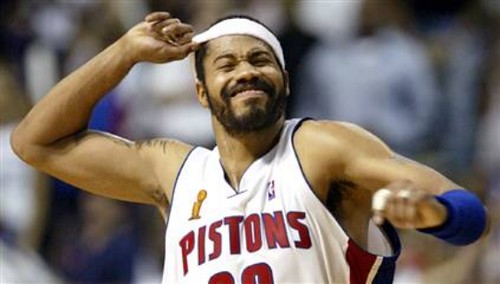
Rasheed Wallace Rule (ruh-sheed' wah'-luhs rool) noun. The informal name for the new NBA-mandated guidelines for technical fouls related to "overt" player reactions to referee calls.
According to ESPN's Henry Abbott, referees have been instructed to call a technical for:
Players making aggressive gestures, such as air punches, anywhere on the court.Refs can also consider dropping the T-Bomb on players who "use body language to question or demonstrate displeasure" and "take the long path to the official" (that is, walking across the court to make their case). Just guessing here, but I bet laughing at calls is also off limits.
Demonstrative disagreement, such as when a player incredulously raises his hands, or smacks his own arm to demonstrate how he was fouled.
Running directly at an official to complain about a call.
Excessive inquiries about a call, even in a civilized tone.
Usage example: Did 'Sheed know The Rasheed Wallace Rule was going into effect this season? Maybe that's why he decided to hang up his jock.
Word History: At TrueHoop, Abbott noted that a similar set of rules were implemented prior to the 2006-07 season. (I called those guidelines "The Rasheed Wallace Rule" even back then.) After a very short enforcement period, those rules were forgotten almost as thoroughly as Pauly Shore's entire misbegotten career.
So the big question is: Will they stick around this time? I doubt it. But if they do, we may never see another montage quite like this:
Labels: Rasheed Wallace, Rasheed Wallace Rule, Word of the Day

playoff apocalypse (pla'-of uh-pah'-kuh-lips') noun. Term describing the empty "end of the world" feeling a basketball fan experiences when his team is officially eliminated from the playoffs.
Usage example: With the Bulls playing the Cavaliers in the first round, my playoff apocalypse could be coming very soon.
Word trivia: This term was inspired by the 10 Traits That Will Come In Handy During The Apocalypse at Cracked.com. The playoff apocalypse experience can be broken down into the following basic stages from apocalypse literature and movies:
1. The Shock and Awe Stage: This describes the sense of stunned disbelief a fan feels when he or she realizes with complete certainty that his or her favorite team is about to be or has been eliminated. Some people will claim that this feeling can begin at any time during the elimination game. For instance, when your team is down by 30 on the road at halftime. But those people are fooling themselves, because true fans are looking at that deficit and thinking, "Well, if they make a strong push in the third quarter, they could cut the lead to 15 points -- no, maybe 12 points -- by the start of the fourth quarter. Then if they come out hot to start the fourth and cut it to single digits, anything could happen!"
Denial is a powerful tool. Just ask Tiger Woods.
By the way, in the above example, I'm talking about the "fan heart" rather than the "fan mind." The fan mind knows what's up. Heck, the fan mind probably knew this series was a hopeless cause from the very beginning. But the fan heart comes from the same part of the mind that still believes in true love, soul mates and unicorns. Of course, having been burned many times over, the fan heart will cause the fan to say things like, "Oh, I knew this shit was going to happen" or "We're finished." But deep inside, that fan heart cannot stop itself from holding on to some pitiful scrap of hope...at least until that hope has been mercilessly crushed beneath the boot of reality, probably while reality goes "Muwahahahaha!"
In a major blowout, SaA won't truly kick in until about the five minute mark of the fourth quarter. That's the tipping point at which even the most irrational basketball fan will be forced to admit their team isn't capable of a 25-0 run. Probably. In the case of a non-blowout, SaA might not start until the final minute, or maybe not even until the final buzzer. At that point, all you will be capable of is sit in quiet dissatisfaction while mumbling things like, "I can't believe it's over," or "I can't believe [insert role player's name here] hit that clutch three. I didn't see that coming."
Despite a truly bummed out feeling, true depression hasn't set in. The human brain has to fully process the events before you start doing shots.
2. The Day After Stage: The term "day after" might be somewhat of a misnomer, because this stage can begin as early as the first hour immediately following your team's elimination. This is when you start breaking things down in ridiculous detail, maybe even going back to the first month of the season. "Oh man," you might say, "if we hadn't lost those early games to the Kings and Timberwolves, and if [insert star player's name here] hadn't gotten injured, we might have earned homecourt advantage, and then things would have gone totally differently."
This is what's known as denial, folks. Sure, your arguments will seem reasonable. Maybe unleashing Sonny Weems earlier in the season really would have won your team a couple more games. Maybe if Kirk Hinrich hadn't missed those games with a sprained thumb, your team could have avoided LeBron James in the first round. But creating all these hypotheticals is a futile and meaningless effort. Much like trying to comb hair over a bald spot or peacocking when you're 5'5" and weigh 350 pounds. You're only shining a spotlight on the fact that you can't come to grips with reality, only you no longer have the excuse that the sad event just happened. You've had time to deal with and accept what happened, but you're refusing to do so. You're still fighting. Which is brave in a way that is both sad and stupid.
3. The Last
Labels: playoff apocalypse, Word of the Day
Usage example: Johnny Most was to home castin' what Gary Busey is to, well, everything crazy.
Word history: This term -- which was partially inspired / derived from home cookin' -- was coined last week by BadDave. We were watching a Bulls game and Chicago play-by-play man Neil Funk made a couple pretty funny comments (things along the lines of "Oh, now, that was a travel!), and BadDave finally turned to me and said, "Hooooome castin'." Just like that, a new WotD was born.
The late Johnny Most was the great grandpappy of home castin'. Back in the day, there was nothing quite like listening to Most lay absolute waste to a Celtics opponent. And in Most's eyes, the officials were included in the long list of "Celtics opponent." In fact, everybody not wearing green and white was The Enemy. Jack McCallum's book, Unfinished Business, has some great Johnny stories and describes how a bumpy cab ride or lousy room service on the road would cause him to vomit hate onto whomever his beloved Celtics were playing on a given night.
Here's some classic Most for you:
Tommy Heinsohn, himself a former Celtic turned Celtics broadcaster, followed in Most's footsteps. I've already covered Heinsohn's insanity -- If you're wondering whether Tommy would skin you alive, eat your insides, and then wear your skin as a tuxedo to his daugther's wedding, the answer is "yes" -- but here's some video:
Lest you think that the insanity is limited to Boston-based broadcasters, here's a mini-meltdown from Matt Bullard:
Another great Bullard moment: tea bags always make you feel better!
Since Neil Funk helped inspire this word, here's some video of him and Stacey King providing a nice little scouting report on Kwame Brown:
Home castin' isn't limited to the booth, either. Watch these Cleveland newscasters freak out after a LeBron James buzzer beater:
Update! Because Basketbawful reader JustinS brought him up, here's Portland's color guy, Mike Rice, screaming directly at an official to check the replay:
Here's another great Rice moment: "Turn down the commercials too, you asshole!"
Update! From Basketbawful reader Viscant: "My favorite homecasting of the year involves the Bucks broadcaster with an audible 'MISS IT!' and then begging the refs to check the replay. Good for a laugh."
Labels: home castin', Johnny Most, Tommy Heinsohn, Word of the Day
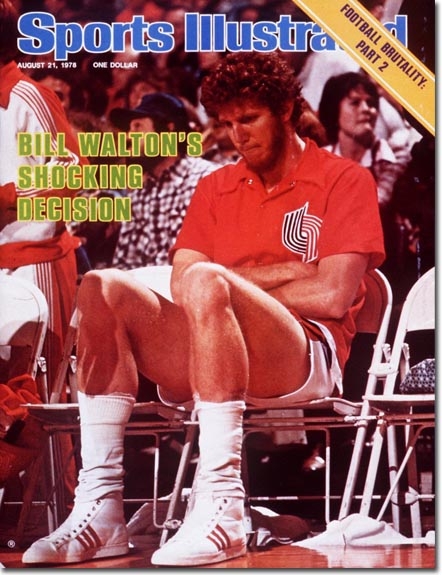
Walton's foot (wolt'-uhnz foot) noun. A damning vulnerability or fatal flaw that can (and often does) doom an otherwise talented player or team.
Usage example: Allen Iverson's "I'm gonna do things my way and my way only" attitude has always been his Walton's foot.
Word history: I coined this term some time in the last couple years because I got tired of using the phrase Achilles' heel. As you probably know, that term originates from the mortal weakness of Achilles, a Greek hero of the Trojan War and the central character of Homer's Iliad.
How good was Bill Walton? Well, he won the MVP during a season (1977-78) in which he played only 58 games. Something like that had never happened before...and it hasn't happened since. But a better question is: how good would Walton have been if he'd been born with normal human feet? Many people have said that, in his early years, Walton was the best center on the planet when healthy. Unfortunately, he was never healthy.
Walton's basketball life was plagued by legendary foot problems, which were made worse by an insistence on playing through injuries and his use of prescription medication to mask the pain associated with them. The Big Redhead appeared in only 468 games during his 10-year career. That's the equivalent of about five-and-a-half seasons. Take away his magical 1985-86 season with the Boston Celtics -- during which he hobbled through a career-best 80 games -- and Walton never played more than 67 games in a single season. And those 67 games were for the 1984-85 L.A. Clippers, which is kind of like saying they never happened at all. For the record, that was the Clippers' first season in Los Angeles. They won only 31 games. Even back then, they were who we would later think they were.
Walton is best known for his days with the Portland Trail Blazers -- during which he won an NBA title and Finals MVP (in 1977) and that regular season MVP -- but he missed 119 games over his four seasons with the Blazers...and things ended badly. From the SI.com vault:
Last Friday evening, as reports began circulating that he might miss more than half of the coming season, Bill Walton left a Portland, Ore. clinic with a cast on his left leg. With the addition of the cast, the puzzle of what had happened to Walton, what had made him demand to be traded from the Trail Blazers, grew even more complicated. The sudden move left some friendships strained. It also left the city's basketball fans stunned. Just 14 months before, Walton was leading a raucous victory parade through the streets of downtown Portland after the Trail Blazers had won the National Basketball Association championship.Walton eventually filed both a malpractice lawsuit and a contract grievance against the Trail Blazers, and he got what he seemingly wanted: a one-way ticket out of Portland.
The initial shock came after a secret meeting in Chicago on Aug. 1 when Walton, who was voted the league's MVP last season, demanded that the Blazers trade him as soon as possible to a team of his choosing, which, late Sunday night, he announced was the Golden State Warriors.
Even more unsettling was the announcement from the Portland club that it "will attempt to abide by his request." And what made the whole thing a mystery was the addendum to which both sides agreed, at Walton's insistence: not to discuss the whys and wherefores of the strange affair.
Last week, however, Walton's reasons for demanding the trade became clearer. He believed that his latest injury -- a fractured bone in his left foot, which was diagnosed after he had appeared in a playoff game on April 21 -- might have been avoided if the Trail Blazers had provided him with proper medical advice and care. Walton also charged the team with the misuse of the pain-modifying drugs Xylocaine and Marcaine, and the anti-inflammatory drugs Butazolidin (phenylbutazone) and Decadron (dexamethasone).
But what Walton really wanted was his health back. He never really got it. Even his one "healthy" season in Boston was tainted by a broken nose (which happened twice) and a broken bone in his wrist. Walton concealed the wrist injury because he felt the '86 Celtics were a special team (they were) and he wanted to finish the season (he did). But it was still Classic Walton. And the next summer, he broke a finger playing one-on-one against Robert Parish. While he was recovering from that injury, he tried to keep in shape by riding a stationary bike for hours on end. In doing so, he broke a bone in his "healthy" foot. That was more or less the end of his career, save for a few token appearances during the season and in the 1987 playoffs.
Before concluding, I want to make something perfectly clear: I have a lot of respect and admiration for Bill Walton. I am not mocking him. But he is a tragic figure who, like Achilles, was cut down by a natural weakness that was not his fault. This is simply my tribute to that fact.
Labels: Bill Walton, Word of the Day
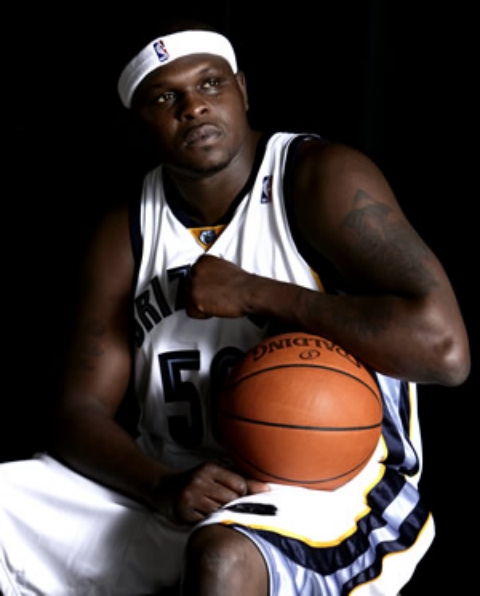
20-10-50 guy (twen'-te ten fif'-te gi) noun. A professional basketball player who has averaged at least 20 points and 10 rebounds or assists for a single season, and whose team lost at least 50 games.
Usage example: Not surprisingly, Zach Randolph is the classic 20-10-50 guy.
Word history: This term was coined back in the fall of 2004 during the aftermath of my very first fantasy basketball draft. My buddy Statbuster was giving me hell for drafting Stephon Marbury, who was coming off a season in which he averaged 20.2 PPG and 8.9 APG. The conversation went something like this:
Statbuster: Dude, why would you draft Starbury? The guy's a cancer. He's like a tumor growing on top of another tumor. He's such a cancer, the American Medical Association is considering renaming "chemotherapy" to "stephonotherapy."We both broke up laughing, and thus the 20-10-50 guy was born. Statbuster immediately pointed out that the Chicago Bulls traded Elton Brand after two consecutive 20-10-50 seasons. Quipped Statbuster: "That's when the Bulls said, 'Let's trade our best player, because he must be the reason we're losing.'"
Me: Dude, team chemistry doesn't affect fantasy stats. And Marbury has great numbers.
Statbuster: Yep. He's always good for 20 points, 10 assists and 50 losses.
I finally unleashed AnacondaHL on this subject, because, after all, he specializes in digging up arcane stats like this. Here are his findings:
20-10-50 guys -- Assists:
Turns out this is pretty rare. In fact, it's happened once: in 1990-91, Michael Adams averaged 26.5-10.5 for the worst defensive team of all time. The only other guy who came close was Tim Hardaway, who in 1992-93 averaged 21.5-10.6 for a Golden State Warriors squad that went 34-48.
20-10-50 guys -- Rebounds:
Now we're cooking! This happened 35 times in league history. AnadondaHL created a nifty spreadsheet full of pretty numbers, but here's the breakdown:
1950s: One guy did it, Neil Johnston of the Philadelphia Warriors, who went 12-57 in 1952-53 despite Johnston's 22.3-13.9.
1960s: It happened 10 times: once each for Elgin Baylor (29.6-16.4 in 1959-60 for the 25-50 Minneapolis Lakers), Bob Pettit (31.1-18.7 in 1961-62 for the 29-51 St. Lous Hawks), Baily Howell (21.6-10.1 in 1963-64 for the 23-57 Detroit Pistons), Gus Johnson (20.7-11.7 in 1966-67 for the 20-61 Baltimore Bullets), John Block (20.2-11.0 in 1967-68 for the 15-67 San Diego Rockets); twice for Willie Naulls (23.4-13.4 in 1960-61 for the 21-58 New York Knicks and 25.0-11.6 in 1961-62 for the 29-51 Knicks); and an amazing three times for Walt "Bells" Bellamy (31.6-19.0 in 1961-62 for the 18-62 Chicago Packers; 27.9-16.4 in 1962-63 for the 25-55 Chicago Zephyrs; and 22.8-15.7 in 1965-66 for the 30-50 New York Knicks).
1970s: It happened 9 times: once each for Elvin Hayes (27.5-16.9 in 1969-70 for the 27-55 San Diego Rockets), Nate Thurmond (21.9-17.7 in 1969-70 for the 30-52 San Francisco Warriors), Bob Kauffman (20.4-10.7 in 1970-71 for the 22-60 Buffalo Braves), Spencer Haywood (29.2-12.9 in 1972-73 for the 26-56 Seattle Super Sonics), Bob McAdoo (25.8-12.9 in 1976-77 for the 30-52 Buffalo Braves...although he was traded that season to the 40-42 New York Knicks), Artis Gilmore (23.7-12.7 in 1978-79 for the 31-51 Chicago Bulls), and Truck Robinson (21.1-11.6 in 1978-79 for the 26-56 New Orleans Jazz...although he was traded that season for the 50-32 Phoenix Suns); and twice for Sidney Wicks (24.5-11.5 in 1971-72 for the 18-64 Portland Trail Blazers and 23.8-10.9 in 1972-73 for the 21-61 Blazers).
1980s: It happened only twice: once each for Terry Cummings (23.7-10.6 in 1982-83 for the 25-57 San Diego Clippers) and Otis Thorpe (20.8-10.2 in 1987-88 for the 28-54 San Antonio Spurs).
1990s: It happened three times: once each for Roy Tarpley (20.4-11.0 in 1990-91 for the 28-54 Dallas Mavericks), Pervis "Out of Service" Ellison (20.0-11.2 in 1991-92 for the 25-57 Washington Bullets), and Derrick Coleman (20.5-10.6 in 1994-95 for the 30-52 New Jersey Nets).
2000s: It has happened eight times so far: once each for Shareef Abdur-Rahim (20.3-10.1 in 1999-00 for the 22-60 Vancouver Grizzlies) and Kevin Garnett (22.4-12.8 in 2006-07 for the 32-50 Minnesota Timberwovles); and twice each for Elton Brand (20.1-10.0 in 1999-00 for the 17-65 Chicago Bulls and 20.1-10.1 in 2000-01 for the 15-67 Bulls), Zach Randolph (23.6-10.1 in 2006-07 for the 32-50 Portland Trail Blazers and 20.8-10.1 in 2008-09*), and Al Jefferson (21.0-11.1 in 2007-08 for the 22-60 Minnesota Timberwolves and 23.1-11.0 in 2008-09 for the 24-58 Timberwolves).
*In 2008-09, Z-Bo became the only player in NBA history to average 20-10 for two 50-loss teams: the 32-50 New York Knicks and the 19-63 Los Angeles Clippers. Even better, Randolph -- currently averaging 20.3 PPG and 10.7 RPG for the 1-6 Memphis Grizzlies -- stands an excellent chance of becoming a 20-10-50 guy for the third time after consecutive trades from two 50-loss teams to another 50-loss team (the Griz were 24-58 last season). In my humble opinion, that marks Z-Bo as the classic 20-10-50 guy.
Labels: 20-10-50 guy, Word of the Day, Zach Randolph
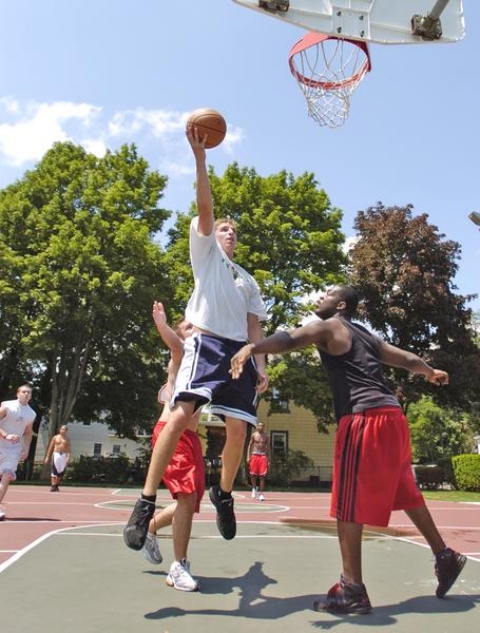
pickup revisionism (pik'-up ri-vizh'-uhn-iz'-uhm) noun. The conscious or unconscious distortion of specific events that occurred during a pickup basketball game such that certain elements of a player's performance appear in a more or less favorable light. Pickup Revisionism appeals to the intellect using a number of techniques to advance a view. These techniques include presenting false memories as genuine, inventing reasons for distrusting accurate accounts of the game, attributing their own conclusions to other players, manipulating statistics to support their views, and deliberately misinterpreting other players' statements.
Usage example: I remember him going something like 3-for-15 from downtown last night, but he swears he was on fire. He even described several shots I know he never made. His pickup revisionism is intense.
Word history: I invented this term to describe how pickup ballers regularly misremember their scoring output and/or shooting performance. It's a takeoff of historical revisionism.
Word trivia: In most cases, pickup revisionism is used to enhance the memory of a player's performance, usually with regards to that player's offense (inflated scoring totals, exaggerated shooting percentages, etc.).
However, some ballers use pickup revisionism to downplay or even disparage how they played. This will lead to statements like "I missed everything" or "I couldn't hit a layup" when in fact they did hit a few jumpers or only missed a couple layups (while making several others).
It can also be used in to negate or diminish the performance of opposing players and even teammates. ("I played great, but damn, Dean couldn't pull down a board and Eric didn't play a lick of defense. We would have won if not for them...")
Labels: pickup basketball, Word of the Day
Alpha Baller Syndrome (al'-fuh bol'-ur sin'-drom') noun. A psychological disorder in which a pickup basketball player attempts to impose his will on other players, often with less-than-successful and possibly inflammatory results.
Usage example: That guy kept screaming at his teammates to crash the boards and play defense, but the only thing he did all night was chuck up threes. He must have Alpha Baller Syndrome.
Word trivia: According to the book Alpha Male Syndrome, alpha males are "take-charge types with a burning desire for victory" whose "high expectations lead to frustration and rage." Furthermore: "At their best, alphas are world-beaters. When they are not at their best -- when they are unaware, out of balance, or out of control -- they create problems that diminish the value of their productive energy. And when they are at their worst, they go down in flames and drag their co-workers, their families and their organizations with them. We call this complex set of characteristics the alpha male syndrome."
Typically, people who suffer from alpha male syndrome:
* Believe their value is defined by the results they achieve.Sound familiar? If you've played pickup ball for any length of time, you've probably run across several bums and knuckleheads who suffer from Alpha Baller Syndrome. In my experience, these so-called alpha ballers typically coach people on the finer points of defense while playing none themselves, implore their teammates to crash the boards while they stand around on the perimeter, and call for the ball on every play...because they expect to be the first, second and third option on every offensive possession. A little part of their soul dies every time someone else on their team shoots the ball. Unless, of course, the teammate scored off one of their brilliant assists.
* Don't care about hurting feelings as long as they acheive their goals.
* Treat any disagreements as a challenge to their authority.
* Tend to think that other people are "the problem."
* Get annoyed when people suggest new ideas or behavior changes.
* Have strong opinions on most subjects, even those they don't know much about.
* Lose their temper when confronted.
Conversely, the alpha ballers often lose their temper when anyone disagrees with them or suggests that they follow their own advice. And they are incapable of seeing their own faults or inadequacies. Alpha ballers believe they're on fire even when they're ice cold, they think they're shutting down their man even when he's burning them alive, etc. In their minds, they are flawless basketball computers sent back in time to change the future of pickup ballers everywhere.
Furthermore, alpha ballers cannot co-exist, which is bad news, since on any given night there may be several alpha ballers on the court at the same time. When that happens, these idiots will try to out-alpha each other. That usually leads to regular stoppages of play so that they can scream at each other until someone backs down, which can take a while. In worst-case scenarios, there might be upwards of seven or eight alpha ballers in a given game. The result, more often than not, will be a 30-minute screaming match that will make you want to swear off of pickup basketball forever. Or at least until the next time you play.
Labels: pickup basketball, Word of the Day
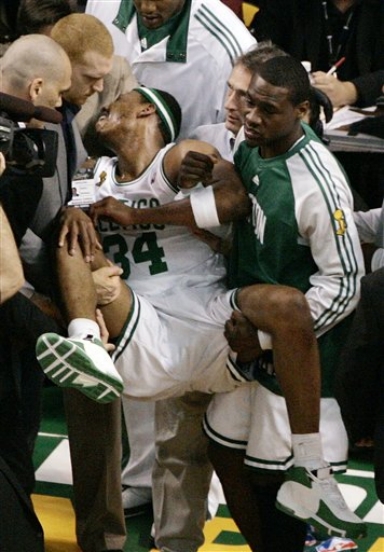
injury fakery (in'-juh-re fak'-uh-re) noun. When a pickup basketball player pretends to be injured in order to gain a temporary advantage.
Usage example: A minute ago, that guy was limping around like his leg was gonna fall off. Then all of a sudden he sprinted downcourt at top speed. That was some serious injury fakery right there.
Word trivia: Injury fakery happens alarmingly often in pickup basketball, which is pretty funny because most pickup ballers consider themselves reasonably tough...and many of them display characteristics associated with alpha male syndrome. Maybe it's just me, but pretending you have a booboo doesn't seem very alpha male to me.
The main reasons a player will fake an injury are:
1. To sell a foul: Leading basketball scientists estimate that nearly 80 percent of the fouls called during a typical pickup game are either partially or completely bogus. And some people think that's a conservative estimate. Makeup calls, karma calls, embarrassment calls and just a plain lack of integrity can lead to ridiculous fouls that leave some people scratching their heads and others fantasizing about a brutal and bloody homicide. However, savvy players (read that: shameless fakers) have discovered that fabricating an injury is the best way to sell a weak (or even nonexistent) foul.
After all, if a man screams out in pain, drops to the floor like a stone while clutching his knee/ankle/whatever, or grabs his face like he was bitchslapped by the Hulk, then it stands to reason he MUST have been fouled...and fouled hard. In many cases, there may be some grumbling or a few hushed whispers suggesting injury fakery, but most players will leave the situation alone or even show concern (or at least feign it). To question an injury isn't only an accusation against the "injured" player, it's an indictment of human nature. Because people are better than that, right? (Click here.)
Plus, a lot of pickup ballers secretly fear that if they accuse another player of faking an injury, they might face the same accusation the next time they get injured...and their next injury might even be real.
2. To trick the player he's matched up with: The best way to succeed in basketball is to exploit mismatches. That's just Common Sense 101. When I'm being guarded by a smaller player, I immediately try to post him up. When I'm defended by a slower player, I drive at every opportunity. And when the man I'm matched up against is hurt, I try to use that to my advantage. Conversely, I assume that an injured player will be limited (at best) or a non-factor (at worst) on offense because of his impairment.
And that's exactly what an injury faker wants his opponent to think.
For instance, a pickup baller might think that he can casually job back on defense because his man has a gimpy knee. This might be done out of laziness or sympathy for the "injured" player (because some pickup ballers actually try to avoid embarrassing their opponents). That's when the faker will strike, abandoning his exaggerated limp and rocketing downcourt for an easy layup. Mind you, this tactic will only work once or twice, but one or two baskets can decide a game.
The same thing can happen when a pickup baller is trying to score. He may assume that his defender won't be able to challenge his shot due to the ankle injury he suffered two possessions ago. Surprise! That hurt player just skyed up for an atom smasher.
3. To trick his teammates: Sometimes (or even most of the time), a pickup baller will be matched up against someone who is better than he is. Maybe much better. It's just one of the unfortunate breaks of the game. And when it happens, the lesser player is probably in for a long and humiliating night. However, that humiliation can be reduced (maybe even to nil) if the lesser player pretends to be hurt. See, that gives him an excuse for getting scored on repeatedly or having his shots routinely fed back to him, Wilsonburger-style. "I just can't stay with him guys," a breathless baller might tell his teammates. "It's this bum ankle. I can hardly move."
Sadly, this doesn't only happen in the face of superior competition. In some cases, the faker might simply be a lazy or careless defender. Instead of digging in and trying to shut down his man, it's easier to just pretend that expending the necessary effort is physically impossible.
Of course, injury fakery might also be used after missing an open or easy shot. For instance, a player might chuck up a 25-foot airball and then grab his hand or arm as if the miss was the result of some painful arm cramp instead of terrible shot selection.
Labels: pickup basketball, Word of the Day
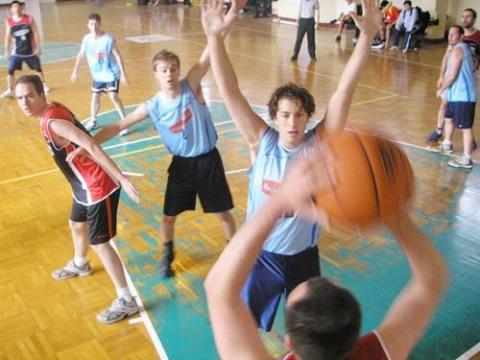
Talent Redistribution (tal'-uhnt re'-dis-trib'-yoo-shun') noun. When one or more players have to be switched from one team to another so that the level of competition will be (roughly) more equal.
Usage example: Damn. That team lost 21-4. Looks like they need some serious Talent Redistribution.
Word trivia: In my experience, most pickup leagues have anywhere from two to four teams competing on any given night. (The number of teams can be and often is greater than that during the prime times at local health clubs and open gyms.) Because teams are chosen by shooting free throws -- the first five to make it comprise team one, the second five team two, and so on -- the actual distribution of talent per team can vary greatly.
Generally speaking, the talent distribution is usually "top heavy," in that the better players tend to hit their free thows, and therefore the first one or two teams end up with better players than the other team or teams.
Of course, there are always situations that can alter this paradigm. For instance, a very good player who typically hits his free throw might miss on his first and even second attempt (assuming it takes that many rounds to shoot up the teams). Or, and this happens a lot in my league, either a very good or remarkably bad player will show up five minutes or so after the games have started. Most of the time, the honor system will kick in and the good player will go to the worst team and the bad player will go to the best team.
Now obviously all teams are not created equal. But sometimes a team sucks so badly that they can't even come close to competing. Like, they will lose every game by a minimum of 10 or more points no matter what they do (and this is using the traditional "1s and 2s" scoring system).
Once it has become clear that one team is going to be haplessly beaten time and again over the course of the night, someone will suggest Talent Redistribution. Sometimes this happens after their first game, but more often than not it happens after they have played at least twice to ensure that the first beating wasn't an aberration. It's standard procedure for members of the bad team to give members of a better team the opportunity to make a Talent Redistribution offer. However, if no offer is made, one or more members of the bad team will probably suggest or even demand it.
In leagues where most of the people know and like each other, Talent Redistribution is usually quick and fair. But nobody likes making their team worse, and Talent Redistribution can result in heated debate and bitter feelings in even the friendliest of leagues.
For instance, there's a player in my pickup league known as Super Mario (because he looks like Mario from the Super Mario Bros. video game). Several years back, Super Mario contracted a case of bacterial meningitis. It almost killed him. He survived, obviously, but the illness left him partially handicapped. Super Mario still plays basketball, but he's so physically limited that he's a liability on both offense and defense. For this reason, the team he's on almost always loses because they're forced to basically play four-on-five.
Some times, Talent Redistribution consists of switching Super Mario from team to team. This can be tricky, however, since he can transform a good team into an awful team. Not surprisingly, nobody wants to play with him, and some people (coughEvilTedcough) get really pissy when Super Mario is "gifted" to their team. This has caused many "day after" arguments. (You know, when you and your buddies discuss the events of the previous night's games over e-mail or in person.)
Talent Redistribution can hit a snag when nobody can agree on a fair and equal switch. In these cases, a trusted league "veteran" will usually step up and act as a sort of Talent Manager. In general, the Talent Manager must have the same basic attributes as a Points Negotiator.
One last note: pickup ballers get pretty upset when Talent Distribution upsets the balance so much that they are unable to win another game (and especially when they're beaten badly after the switchup). This inequity won't be forgotten and can be used in future Talent Distribution debates (e.g., "We got stuck with Super Mario last time and we sucked afterward. Give us Paul instead.")
Note from Evil Ted: Some players have a lack of talent so galling that it can actually eliminate the possibility of fair Talent Redistribution altogether. Instead of just being a "poor player," this person is actually a negative player (a.k.a. Nugatory, Minus Man, Captain Entropy, Anti-game, Boat Anchor, Vaporware). For example, a Super Mario has been known to take a dominant force of a team and turn it into a sad-sack loser. In such cases, said dominant team may actually need to have two players replaced in such a way as to actually strengthen the remaining four.
The Equation works thusly. The dominant team as it begins (with "1" being an average player):
1.2 + 1.3 +1.5 + 1.1 +1 = 6.1
The team with an overall strength of 6.1 can now be decimated by removing any one player and adding Captain Entropy, a fellow who plays no defense and pretty much can't run or do anything competant on the court:
1.2 + 1.3 + 1.5 + (-1) +1 = 4
Note how far the mighty have fallen. This team is getting it's ass kicked, not only because it's overall team strength is just 4, but additionally because the talent is no longer evenly distributed amongst the five players (A neg 1 is throwing the ball away, standing at half court on offense and defense, etc., where even a bunch of .8 guys are getting a hand in the face and the ball around the horn).
Ergo, we must actually bolster the supporting cast for the Minus Man by replacing the worst of the remaining group (Mr. 1) with someone better. The new team is as follows:
1.2 + 1.3 + 1.5 +(-1) + 1.4 = 4.4
This team is now competitive, and may become more so IF they force the Boat Anchor out of the offensive scheme and play help defense. If, however, the good players get dejected and lose their will, this team may still get it's collective ass handed to it repeatedly. This two-for-one paradigm shift may require the institution of a future word of the day: The Mario Rule.
Labels: pickup basketball, Word of the Day
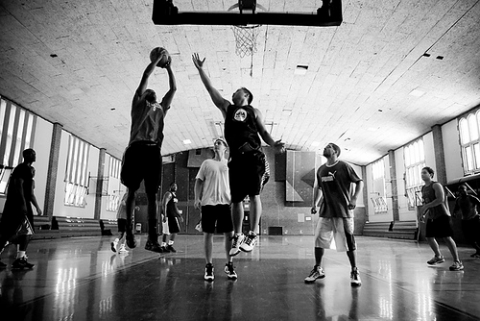
First Night Superstar (furst nit soo'-puhr-stahr') noun. A pickup baller who plays extremely well during his first night at a pickup league, but whose performance drops off significantly on subsequent nights.
Usage example: Man, remember how good that guy was when he first showed up? Now he sucks. I guess he was a First Night Superstar.
Word history: I coined this term a few years ago at my weekly pickup league. I couldn't help but notice that many times a new guy would totally clean up on his first night and then quickly devolve into an average (or below average) player. I think this happens for a few reasons.
First off, players tend to try harder and focus more when they're unfamiliar with the court, their teammates and their defenders. Many new players desperately want to make a good impression, so they'll hustle, take good shots, avoid bad passes, crash the boards, and so on. However, comfort tends to lead to complacency (at best) and laziness (at worst). So after these guys become accustomed to their surroundings, they often stop hustling and rebounding and start forcing up junk shots and making careless passes.
Secondly, defenders sometimes take a "wait and see" approach with a new player. After all, you don't necessarily want to scare the dude off on his first night. Furthermore, it's impossible to tell whether someone is going to snap and start a fight the first time they take a hard foul or get caught by a blindside pick. Then too, it can be hard to stop a guy before you figure out how good he is and where he likes to shoot from.
But eventually the defense will catch up with the newbie. After people start to learn his game, they figure out how to slow him up or shut him down. This can happen pretty quickly since most pickup ballers have only one or two go-to moves and/or pet shots. I mean, if someone always jukes right, dribbles left twice and then pulls up for a 15-footer...well, the effectiveness diminishes pretty quickly.
If the new player is genuinely skilled, the league's top defender (or defenders) will be dispatched to break their spirit. And other people will step up to provide quick help, because nobody wants a new guy to show up the regulars. My buddy Mister P refers to this stop-the-noob phenomenon as "feeding them their rookie cookies." One Wednesday night, a new guy came out and torched everybody with long-range three-pointers. (By "long-range" I mean triples taken four or five feet beyond the arc.) At one point, I was on my way to the drinking fountain when I overheard him asking if there was any "real competition" in the league.
Unfortunately, I didn't get the chance to play against him again that night. But the next Wednesday, I dropped the hammer on him. And so did everybody else. Defenders were up in his face, and everybody jumped out on him on picks. You could tell he hated it, and he became increasingly frustrated as the night went on. I don't think he hit a three all night. And he never came back.
It's worth noting that the increased defensive intensity usually slackens over time, usually after the new guy's focus and intensity returns to "normal" levels. Then he and the other players settle into a comfort zone that rarely changes. Until the next new guy shows up.
Labels: pickup basketball, Word of the Day
Retired Legenditis (re-tird' lej'-uhnd-it'-is) noun. An acute psychological disorder that causes some (but certainly not all) NBA legends to lose their damn minds during retirement. At best, the ensuing erratic and unpredictable behavior embarrasses both them and their families. At worst, it sullies their legacy forever.
Usage example: Reggie Miller is the latest former NBA great to contract Retired Legenditis.
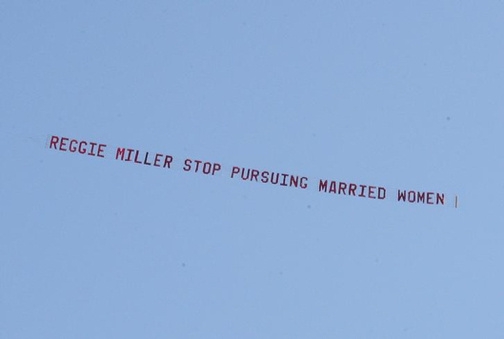
Word History: The term was coined last night (August 11, 2009) by Statbuster while we were discussing Reggie Miller's very public feud with Alex von Furstenberg, a Malibu surf shop owner and son of fashion legend Diane von Furstenberg. Apparently, Reggie spent several months flirting with von Furstenberg's fiancé -- clothing designer Ali Kay -- which caused von Furstenberg to go apeshit. It probably didn't help that Kay sent Reggie a couple sizzling pics via text message. Restraining orders were filled out by both parties but never filed, and von Furstenberg paid a small plane to fly a banner over the beaches of Malibu to warn Reggie off of married women. Bad times all around.
This mess was of course preceded by Reggie having a tramp stamp tattooed around his belly button and pouring vodka down the gullet of some barely-legal babe while wearing a ghastly sweater vest. Remember when NBA legends retired with dignity?
Oh, right. You probably don't. Not with Charles Barkley getting busted for DUI and then telling the arresting officer "I was gonna drive around the corner and get a blow job." (Later at the police station, Sir Charles told another officer "I'll tattoo my name on your ass" if he helped "get him out of the DUI.") Oh, and let's not forget Chuck's gambling addiction or that time he had a civil complaint filed against him for a $400,000 gambling debt he accidentally forgot to pay. He also joked about Isiah Thomas' alleged suicide attempt at a press conference (more on that below).
Hey, I guess it's tough being a basketball legend who doesn't play basketball anymore. Julius Erving made a sex tape with a woman who was not his wife, and that tape was mysteriously released during his messy divorce trial. Elgin Baylor spent a couple decades ruining the Clippers. (And after Elgin was FINALLY fired, he filed an employment discrimination lawsuit against the Clippers, team owner Donald Sterling, and the NBA. He alleges that he was underpaid during his tenure with the team and then fired because of his age and race.) Kevin McHale completely McFailed as GM of the Timberwolves. Larry Bird is still running the Pacers into the ground. Magic Johnson made a couple ill-fated comebacks (the second of which featured an ejection and suspension for bumping a referee and then claiming the ref bumped him), embarrassed himself with an ugly 16-game coaching stint with the Lakers (during which the team went 5-11), and then totally bombed as host of The Magic Hour (after which he blamed his failure on a lack of support from African American celebrities).
Michael Jordan completely mismanaged the Washington Wizards (epitomized by his selection of Kwame Brown with the number one overall pick in the 2001 NBA Draft) until he was fired by owner Abe Pollin. The sacking came despite MJ's two-season comeback with the Wiz, during which he "led" the team to back-to-back 37-win seasons and utterly failed to make the playoffs (despite guaranteeing a postseason berth). Things have gone only slightly better with the Bobcats...seeing as how Mike only wasted the third overall draft pick of the 2006 NBA Draft on Adam Morrison. But that's the sole improvement. MJ also likes bumping and grinding with the barely-legals. And here's some more evidence that his divorce didn't exactly break his heart.
And then there's Isiah Thomas. First, he destroyed the CBA. Second, he got fired as coach of the Pacers by his former rival Larry Bird. Then he became GM and later the coach of the New York Knicks...otherwise known as The Greatest Epic Fail in NBA History. Shortly after the Knicks finally canned him, Isiah apparently tried to commit suicide by overdosing on sleeping pills. He then claimed it was his daughter who tried to kill herself. The truth was never made clear, but when asked about the situation during a press conference, Isiah couldn't deny it was a suicide attempt.
The moral of this post? Maybe it's better NOT to become an NBA legend.
Labels: Isiah Thomas, Larry Bird, Magic Johnson, Michael Jordan, Reggie Miller, Word of the Day

points negotiator (pointz ni-goh'-shee-eyt'-uhr) noun. The player or players in a pickup basketball game who are trusted and allowed to pass judgment on any scoring discrepancies.
Usage example: Many times, older players are given the role of points negotiator.
Word usage: It never ceases to amaze me how difficult it is for people to keep track of the score during a pickup game. As far as I've been able to determine, the whole 1-pointer/2-pointer scoring system was invented for the sole purpose of making it easier to score the games. Despite the use of the most basic math possible, scoring discrepancies occur with ridiculous frequency...and few things cause more heated conflict on the pickup court.
When a scoring discrepancy happens, both sides feel they're getting screwed. Nobody ever just laughs it off as a simple mistake that can be easily remedied. The interpretation is that points are being stolen, and with the way people behave during the ensuring debate, you'd think the fate of humankind was riding on the outcome. And I'm not even talking about the outcome of the game. I mean who gets to win the argument about what the "correct" score is.
Many times, these disputes are settled by which team screams the loudest or acts the most ready to solve things through a fistfight. Other times, both teams choose to abide by the ruling of a points negotiator. The points negotiator typically is someone who is known, liked and respected by most of the players. As such, points negotiation usually happens in weekly pickup leagues. It can also happen in generic pickup games with savvy players who give off an aura of authority.
Points negotiators are usually older players, the general assumption being that they are wiser and more mature, and therefore better able to think and react logically. This isn't true whatsoever, but cultural ideology often takes over when conflict resolution is necessary.
Aside from the age factor (which isn't a constant), a points negotiator must have a reputation for making fair calls most of the time. Furthermore, they should have a history free of being on the wrong side of point shaving incidents. Once a player has bungled the score a few times, they lose all point tracking credibility until player turnover reaches 80 to 90 percent.
Moreover, points negotiators must have the ability to remain calm in the face of conflict. If they start cussing and yelling, the other players will lose faith in their ability to remain logical and emotionally detached from the eventual outcome. A single sneer or chuckle of disgust can appear sinister, which will lead some players to conclude that the points negotiator has some specific vested interest in the final decision. And even though that is often the case, people are often comforted by the delusion of impartiality.
Now this final point is very important. A points negotiator will many times be forced to make a ruling he either isn't sure about or knows is incorrect. Dubious decisions are made because a points negotiator is, after all, human and might not have been closely tracking the score. Incorrect rulings are made because sometimes the only way to keep the peace is to let a given team have their way, either because they've been losing all night or because most of the calls have been going against them. Sometimes making everybody happy is more important than the final score.
Unless you're on the team that got hosed.
Labels: pickup basketball, Word of the Day
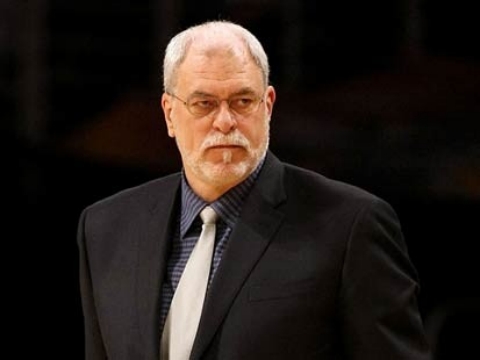
Note: This post was nominated by Basketbawful reader kobefearslebron.
Phil Jackson Face (fil jak'-suhn fas) noun. A facial expression that simultaneously conveys both supreme annoyance and resigned acceptance.
Usage example: Every time Evil Ted sends one of his patented no-look passes sailing out of bounds, I make the Phil Jackson Face.
Word history: The term was semi-coined by Bill Simmons in his article Take a retro look at Game 2 and then more fully explained in Kobe '09: Change we can believe in? I say "semi-coined" because Simmons actually called it The "Should I point out to him that MJ would have absolutely passed there?" Face. Here's the excerpt:
My favorite image of the 2009 Finals was Phil's face after Kobe went one-on-four at the end of Game 2, something I jokingly called The "Should I point out to him that MJ would have absolutely passed there?" Face in my column.Word trivia: My buddy Mister P is the absolute master of the Phil Jackson Face, so much so that I'd rename it the "Mister P Face" if he was famous (outside of our pickup league, anyway). Even more than Evil Ted (who is a hardwood bastard in his own right), Mister P simply CANNOT stand playing on a team with one or more crummy players. When a lousy shooter forces up a hotly contested 20-footer (hereafter referred to as a "Kobe") instead of passing to a wide open Mister P -- and, sadly, this happens a lot -- he'll turn, give me an extended Phil Jackson Face (usually with a slight head tilt thrown in for good measure), and then trudge slowly down court. (As you probably already know if you play pickup ball, defensive apathy kicks in almost immediately for players who don't receive passes on open looks.)
You know what his reaction reminded me of? Being married. Spend enough time with a person and you accept their strengths and weaknesses for what they are. For instance, I am messy. I leave clothes on the floor. I will make coffee in the morning, mistakenly leave a little coffee on the counter and not clean it up. I'm just selfishly absentminded about little things like that. My wife stopped complaining about it around three years ago. When I do those things now, she just makes the Phil Jackson Face. Crap. I'm stuck with him. It's not even worth getting into it. The plusses outweigh the minuses. Let's move forward. Jackson never made that face with his first wife (Jordan); with his second wife (Kobe), he makes it every so often. You could say they're an imperfect match, and if you want to keep the domestic analogy going, they even legally separated in 2004 after a couple of unhappy years. Now they might go on like this indefinitely.
As alluded to in the usage example, I make this face at least once a night when teamed up with Evil Ted. He has this move in which he drives hard, jumps in the air, and then throws a two-handed behind-the-head pass that occasionally looks brilliant but usually results in a turnover or a teammate scrambling madly to prevent the turnover. Of course, I know how this maneuver became part of ET's repertoire: Larry Bird did it all the time, and it's prominently featured in a passing montage during Larry Bird: A Basketball Legend. Keep in mind that the degree of difficulty of passes featured in a Larry Bird highlight film is pretty high. There probably should be a disclaimer that says: "Do not attempt these moves, mortal fool!"
There's also a time during almost every pickup game when my features get frozen in the Phil Jackson Face...and that's game point. Everybody wants to be the hero, especially if it's a close game. It's almost as if the ball is carrying a virus that's 100 percent contagious, and that virus fills its victim's mind with one all-consuming thought: MUST SHOOT. And, of course, the opposing team usually picks up their defensive intensity, which means that the "good" looks get further and further away from the hoop, until guys start chucking it up from near midcourt. ("BUT I WAS OPEN!") Strategies that worked all game will be carelessly abandoned at game point for one-on-one drives into traffic, leaning half-hooks, turn-around jumpers from impossible distances, and any other bad shot you want to name/describe. But you know it's going to happen, so most of the time the Phil Jackson Face is all you can do.
Labels: Bill Simmons, Evil Ted, fan submissions, Phil Jackson, pickup basketball, Word of the Day

Ibuprofen formula (i'-byoo-pro'-fuhn for'-myoo-luh) noun. A simple formula used to determine how many Ibuprofen (or some other form of aspirin) someone should take prior to playing competitive pickup basketball. The formula is: [Number of Full Decades Lived] + 1. For example, a 27-year-old would take three Ibuprofen prior to playing pickup ball (two full decades lived + 1).
Usage example: Ever since I discovered the Ibuprofen formula, I always pop a few aspirin before my pickup league. It really helps.
Word history: Back in the late 1980s, I remember watching a Boston Celtics highlight video in which Kevin McHale was relentlessly teasing Bill Walton. McHale joked that when Bill arrived at the Boston Garden for a game, the first thing he did was flag down a ball boy and order the kid to bring him eight aspirin and a Coke. "He needed, like, a whole bottle of painkillers before the game even started!" cracked McHale.
It's obviously been a few years since I saw that video, and I was considerably younger, so my memory might be a little faulty as to the exact wording. But that exchange always stuck with me, and I often thought back to it and wondered why Walton would need to anesthetize himself BEFORE playing basketball. But now I get it.
Still, it wasn't my idea to start downing Ibuprofen before playing. The Ibuprofen formula was the brainchild of Larry, my pickup league's resident old guy. Larry's in his 60s, but unlike most of the men I've known who played pickup into their sixth decade and beyond, he's still really good. He's automatic from 15 feet and he has this move -- where he drives baseline, pivots under the basket and hits a reverse layup/scoop/hook/something-or-other -- that's nearly impossible to stop in single coverage. It's funny, because he's old, slow and not remotely athletic, and so newcomers to the league (especially the young jumping jacks) always think they're going to stuff him with extreme prejudice. But Larry is so wiley, and he executes that move with such an uncanny, machine-like precision, that it's pretty rare when a defender is able to effectively challenge the shot. Larry either hits it or he doesn't, but the outcome usually has nothing to do with the defense.
Anyway, one day Larry and I happened to be chatting on the sideline when the subject of his age came up (as it inevitably does). I asked him how he gets ready to play, because I'd never once seen him stretch or warm up in any way other than shooting around. Without the slightest hesitation, Larry said: "I take about seven Ibuprofen." I must have given him a funny look, because he laughed and said, "I've been taking Ibuprofen before I play for years. I take it right before I get here, that way it kicks in about halfway through the first game, and then I'm not sore afterward. Well, not until the next morning, anyway." I asked him why he takes so many. "Well, it's a formula. I take one for each decade I've lived, and then I add one more. Started doing that in my 40s, and I've done it ever since. It works."
I was curious, so before my next pickup game, I tried it. And you know, it really does work. Of course, I had some concern about taking too many pills. Larry was obviously taking way more than the recommended dosage, and by using the Ibuprofen formula, I would be too. Was it dangerous? I went ahead and checked with a friend who's a nurse. He -- yes, he's a murse -- administers a LOT of Ibuprofen, and he told me that there was no threat of overdosing by taking a couple extra Ibuprofen. In fact, he said that people with larger-than-average body mass (I'm 6'3" and 200 pounds) who participate in physically challenging activities (like baskeball or other amateur athletics) may actually require more than the recommended dosage.
So if you're getting a little older and starting to feel the aches and pains of the pickup game, don't do something stupid like "retire" (as a few of my friends did after turning 30). Try the Ibuprofin formula first. And if that doesn't work, try some vagisil.
Labels: Ibuprofen, pickup basketball, Word of the Day
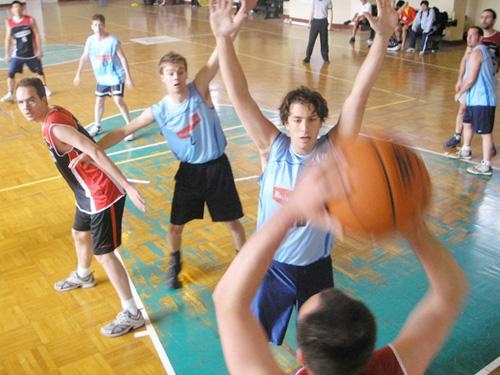
passer's remorse (pas'-uhrz ri-mors') noun. An emotional condition whereby a pickup baller experiences an immediate and gut-wrenching sense of regret after making a pass.
Usage example: I suffered from an intense case of passer's remorse after dishing the ball to Michigan Guy on game point.
Word history: I coined the term -- which is an obvious takeoff of buyer's remorse -- while me and some buddies were making a list of the people in our pickup league to whom we should never pass the ball. It was generally agreed that passer's remorse typically occurs after the following events:
1. A straight up bad pass.
2. An overly fancy pass that results in a turnover or spoils an easy score. Such as, for instance, when the ball handler jumps in the air before dishing a no-looker or tries to make a behind-the-back pass on the fast break. Or any behind-the-back pass, for that matter. These distributions rarely end well...or end up in the hands of a teammate for that matter. Memo to pickup ballers everywhere: There is no SportsCenter for pickup leagues.
3. When you pass the ball only because you don't realize how wide open you are. Like when somebody hits you under the basket, and you're sure that some big dude is waiting behind you, ready to deliver an atom smasher. Only after you dish the rock do you realize the horrible truth: You were all alone. (But since pickup ballers miss 50-60 percent of their layups, open or otherwise, that might actually have been the best decision.)
4. When you pass the ball to a Black Hole, SWAC, or a NBDM (Notoriously Bad Decision Maker). It's usually clear from the look in his eyes -- well before the ball even touches his greedy, twitching fingers -- that he's putting up the shot no matter what.
5. When you pass the ball to a truly awful player. This happened to me just last night. I drove baseline and, when the defense collapsed, shovel-passed to a teammate who was wide open for a two-footer. Unfortunately, since I was using my peripheral vision, I didn't realize until it was too late that he was free for a reason: He's the worst player in our league. (We've nicknamed him "The Human Turnover.") Terrible players are particularly dangerous to teammates who have been conditioned to always hit the open man. Note that there are certain players who should never be allowed to come into contact with the ball. Partly because they suck and will (most likely) somehow manage to ruin the play, and partly because whatever they have may be catching, and you're probably going to have to touch that ball again.
Labels: pickup basketball, Word of the Day
February 2005
October 2005
November 2005
December 2005
January 2006
February 2006
March 2006
April 2006
May 2006
June 2006
July 2006
August 2006
September 2006
October 2006
November 2006
December 2006
January 2007
February 2007
March 2007
April 2007
May 2007
June 2007
July 2007
August 2007
September 2007
October 2007
November 2007
December 2007
January 2008
February 2008
March 2008
April 2008
May 2008
June 2008
July 2008
August 2008
September 2008
October 2008
November 2008
December 2008
January 2009
February 2009
March 2009
April 2009
May 2009
June 2009
July 2009
August 2009
September 2009
October 2009
November 2009
December 2009
January 2010
February 2010
March 2010
April 2010
May 2010
June 2010
July 2010
August 2010
September 2010
October 2010
November 2010
December 2010
January 2011
February 2011
March 2011
April 2011
May 2011
June 2011
July 2011
August 2011
September 2011
October 2011
November 2011
December 2011
January 2012
February 2012
March 2012
April 2012
May 2012
June 2012
July 2012
August 2012
September 2012
October 2012
November 2012
December 2012
January 2013
February 2013
March 2013
April 2013
May 2013
June 2013
July 2013
August 2013
September 2013
October 2013
November 2013
December 2013
April 2014
May 2014
June 2014
July 2014
August 2014
June 2018
July 2022